الثلاثاء، 4 سبتمبر 2018

Trump comes out swinging ahead of big political week

(CNN)President Donald Trump couldn't wait to launch into the fall political season, an intense 10-week conflagration that marks a hugely consequential chapter in his turbulent presidency.
He spent Labor Day, when campaign politicking goes into overdrive, unleashing a raging tweet storm blasting his beleaguered Attorney General Jeff Sessions and other favorite targets, such as fired FBI Director James Comey, officials leading the Russian probe and the media.
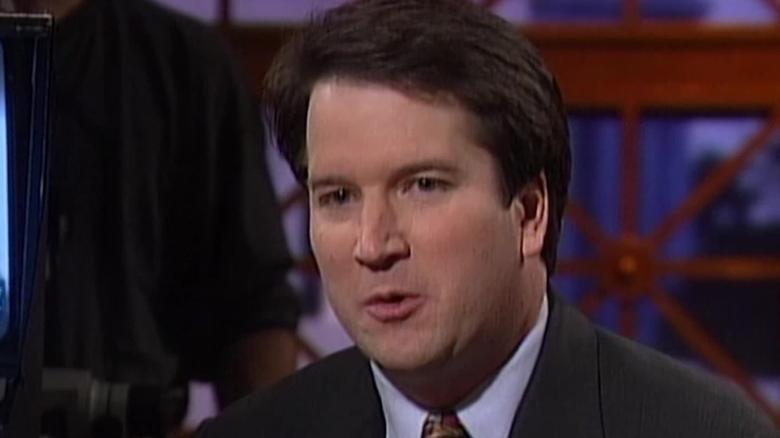
But the critical period that might lay the foundations for the nation's ideological course for years and even decades to come will truly get underway on Tuesday morning when confirmation hearings start for Trump's second Supreme Court pick, Brett Kavanaugh.
    The likely confirmation of Kavanaugh will drag the court to the right and make an ardent conservative, Chief Justice John Roberts, the bench's swing vote. It is a scenario that may take several Democratic presidencies to undo, could supercharge conservative voters and will on its own elevate the Trump presidency to undeniable historic significance.
    The battle that unfolds in Room 216 of the Hart Senate Office Building will also juice the fight between the parties before November's midterm elections -- the culmination of weeks of political combat that could have grave implications for the Trump presidency itself.
    The elections, for the entire House of Representatives, one third of the Senate and a clutch of critical gubernatorial and statehouse races, will mark the first time a nationwide electorate has had the chance to cast judgment on Trump's tumultuous impact as the 45th president.
    If history is any guide, Trump could be slammed by a corrective wave building since his 2016 election triumph that sweeps Democrats to significant gains, including the possible capture of the House. This would be a nightmare scenario for Trump, since it could tighten a vise of investigations around his White House or even lead to impeachment hearings.
    But if the President drives his fabled political base to the polls in sufficient numbers to save the House he would surely interpret his triumph as validation of his tempestuous style and emerge more powerful and even less constrained than ever before.
    In between the Kavanaugh hearings and the midterms, a succession of challenges loom, from the Mueller investigation to the stuttering effort to force North Korea to give up its nuclear weapons, that will have considerable implications for Trump and the rest of the world.

    'Good job Jeff'
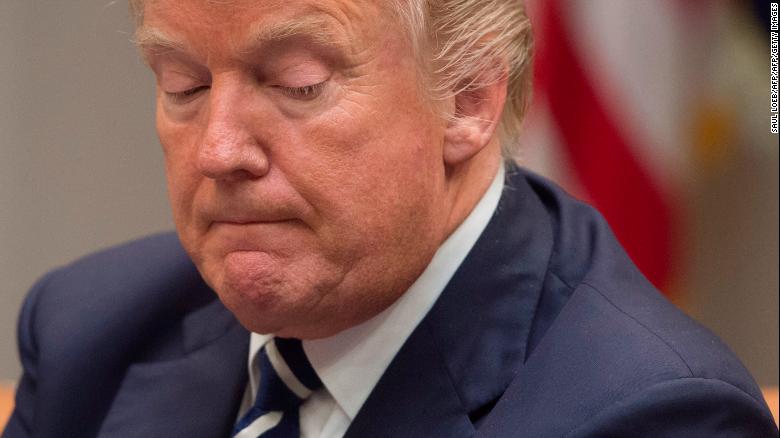
    Everyone else might have been enjoying the last long weekend of summer on Monday. But for Trump, there is no off season for attack politics. After aborting an apparent trip to play golf on a steamy Monday afternoon, he set off on a Twitter tear against some of his favorite targets.
    First, he lambasted Sessions, this time over corruption indictments laid against Reps. Duncan Hunter of California and Chris Collins of New York, the first two House members to endorse him.
    "Two easy wins now in doubt because there is not enough time. Good job Jeff....," Trump tweeted.
    The intervention held a mirror up to Trump's mood and nature: It revealed his nervousness about the midterms and his disdain for the traditional firewall between the White House and the Justice Department, meant to guard against the politicization of the law.
    It again hinted at the thin ice under Sessions, who Trump appears to believe should be acting as his own personal protector and lawyer rather than as an independent guardian of justice.
    Several Republican senators appear to have softened their support for Sessions in recent weeks, sparking speculation that the President could dismiss him after the midterm elections, a period that could be especially volatile if Democrats win the House. Trump told Bloomberg Sessions' job was safe at least until then.
    Some Trump critics fear that the President could dispense with Sessions, who is recused from the Russia investigation, in order to get an attorney general that could frustrate it or even prevent the public release of any final report that Mueller chooses to write. It remains unclear however whether the President could get a nominee with such an agenda through Senate confirmation.
    Trump on Monday also seized on a more positive aspect of his midterm election message, the strength of the economy, at the start of the week that will include the latest jobs report from his government.
    "The U.S. is respected again!" Trump wrote, as he retweeted a message from his press secretary, Sarah Sanders, from which GOP leaders would love him never to deviate.
    "Our economy is booming, millions are working again, and our country is back on the right track thanks to President @realDonaldTrump's policies. Happy Labor Day!" Sanders wrote.
    Robust economic growth and low unemployment constitute the best incentive Republicans can put before voters this fall. But there is also an argument to be made that Trump's approval ratings -- he dipped to just 36% in one recent poll -- should be far higher given current prosperity. The fact they are not could be a warning sign that Trump's disinclination to reach out to voters that do not already support him could help doom many Republican lawmakers come November.

    The mystery of the Russia probe
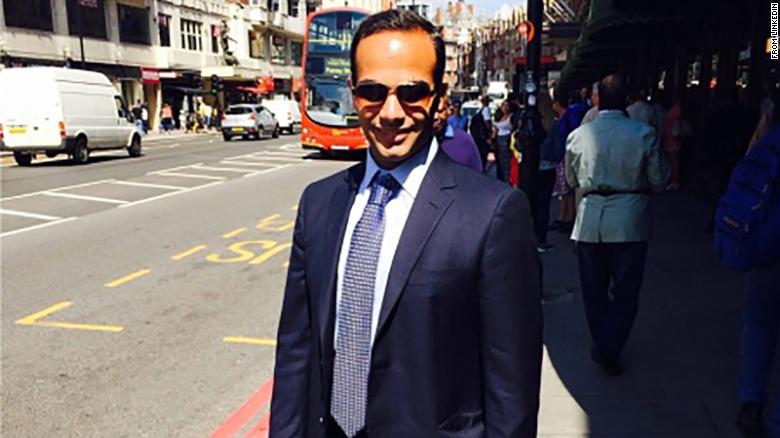
    Another dark cloud hanging over the midterm elections is the Russia investigation.
    Washington is waiting to see whether special counsel Robert Mueller will make any significant moves in the intensely political period ahead or whether he will choose to try to insulate his prosecutors from Republican accusations of trying to influence voters.
    The White House has given every sign that it would welcome a campaign season clash with Mueller as a way to fan scare talk of impeachment that could convince any wavering Trump voters that their champion needs their support at the polls. Trump's lawyer Rudy Giuliani has promised to put out his own report debunking notions of Russian collusion or obstruction of justice.
    Trump must also worry about widening legal complications from the guilty plea lodged by his former personal lawyer Michael Cohen in a tax and fraud case in which prosecutors also granted immunity to the chief financial officer of the Trump Organization.
    His worries on this score may intersect with the Kavanaugh hearings since a debate is expected on the extent to which the President should be exposed to legal scrutiny while in office.
    Despite being an aggressive member of independent counsel Kenneth Starr's team during the Lewinsky scandal that led to Bill Clinton's impeachment, Kavanaugh now appears to believe that Congress should shield sitting presidents from civil and criminal cases and takes a sweeping view of executive power.
    He is likely to face calls from Democrats to recuse himself from any such cases that make it to the Supreme Court.
    Though the Republican majority in the Senate and the demise of the filibuster rule for Supreme Court nominees means Kavanaugh is likely to be confirmed, both parties will use this week's confirmation hearings to engage their most committed activists before the midterms.
    Republicans will effectively be making good on a bargain that Trump made with evangelical voters -- an important part of his coalition that has held firm despite questions over his conduct and character -- following his vow to anoint authentic conservatives to the Supreme Court.
    Democrats are likely to use the hearings to build on fears among liberals that the right to have an abortion could be at risk from the new Supreme Court's conservative lurch -- a factor that could send moderate voters flocking to the polls in November.
    Trump will be sure to capitalize on the Kavanaugh hearing when he kicks his midterm campaign into a higher gear at the end of the week, with visits to Montana and North and South Dakota.
    Before then, his administration is braced for the resumption of trade talks with Canada, following his warning to exclude the US ally and top export market from the new iteration of the North American Free Trade Agreement that he put at the center of his 2016 campaign.

    Shaquille O'Neal's Ex-Wife Shaunie: Kobe Bryant Offered to Train Their Son

    Los Angeles Lakers legend Kobe Bryant has stayed busy in retirement, but he has room on his schedule to help out an old friend if he ever comes calling.
    Shaqir O'Neal is the son of Basketball Hall of Famer—and Kobe's former Lakers teammate—Shaquille O'Neal, and there is an offer on the table from Bryant himself to train Shaqir.
    According to TMZ Sports, O'Neal's ex-wife, Shaunie O'Neal, said Monday that logistical issues are primarily what's stopping it from happening: "Kobe always offers ... we're just so far from each other, but he always offers."
    Shaq and Kobe have had a contentious relationship at times over the years, but they won three championships together in L.A., and they seem to be on good terms currently.
    The 15-year-old Shaqir will play at Crossroads school in Santa Monica, California, during the upcoming season, where he will team with LeBron James Jr.
    Shaqir's older brother, Shareef O'Neal, is set to play college basketball at UCLA in 2018-19.
    While Shaunie's comments suggest Shaqir may not come under Kobe's tutelage anytime soon, a standing offer from an 18-time NBA All-Star may come in \Deng Buyout Clears Path for Lakers to Chase KD

    How the Nationals Completely Ruined the Bryce Harper Era

    SEPTEMBER 4, 2018
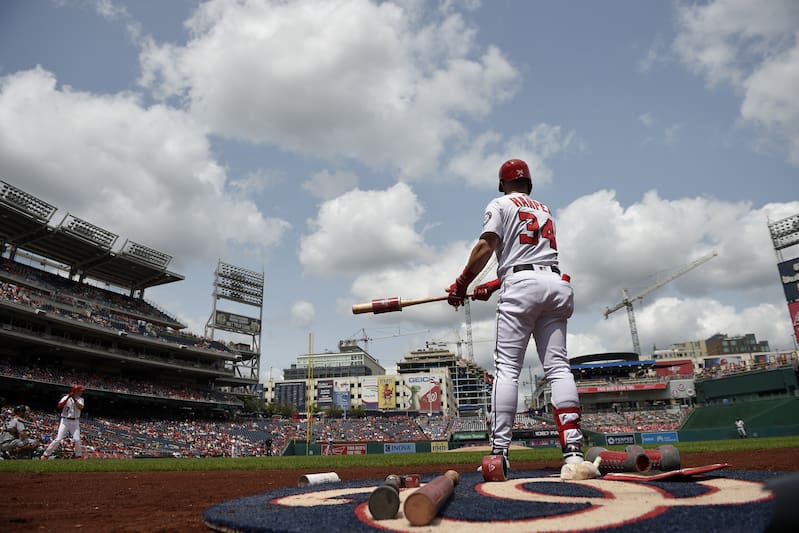
    Washington Nationals' Bryce Harper warms up by the on deck circle during the first inning of a baseball game against the Miami Marlins, Sunday, Aug. 19, 2018, in Washington. The Marlins won 12-1. (AP Photo/Nick Wass)
    Nick Wass/Associated Press
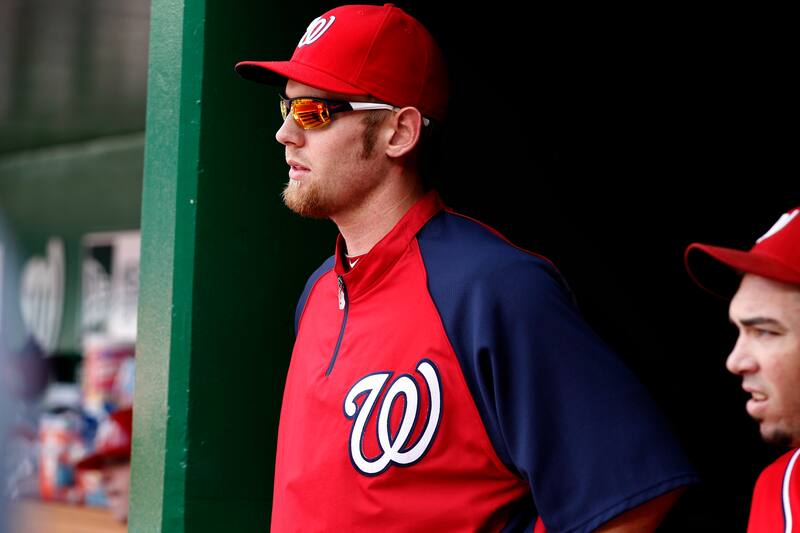
    Bryce Harper has held up his end of the bargain since the Washington Nationals drafted him No. 1 overall in 2010.
    He was only 19 years old when he debuted in 2012, and that season he also made his first National League All-Star team and captured the NL Rookie of the Year Award. He's since won an NL MVP Award and made five more All-Star teams.
    But when Harper waltzes into free agency this offseason, the Nationals will be left to wonder how the hell the they couldn't win even a single postseason series with him.
    Washington entered 2018 with hopes that this would be the year it got over the hump. And while the Nats haven't been eliminated from playoff contention yet, they sent up a white flag in August. They're 69-69, and the only question is whether they'll top .500.
    Despite this year's flop, the Nationals have more regular-season wins (624) since 2012 than every team except the Los Angeles Dodgers (634). And as their ever-increasing payrolls show, it's not for lack of trying that they did not push their success into October:
    In addition to Harper, Stephen Strasburg, Jordan Zimmermann, Anthony Rendon and Juan Soto are cornerstones who came up through the Washington system. Moreover, general manager Mike Rizzo's free-agent and trade success stories include Max Scherzer, Daniel Murphy, Gio Gonzalez, Trea Turner, Adam Eaton, Doug Fister, Denard Span, Tanner Roark and Wilson Ramos.
    The Harper-era Nats aren't simply the National League's answer to Mike Trout's Los Angeles Angels, who've cursed themselves with poor additions (namely Albert Pujols) and a slow trickle of homegrown talent.
    If anything, the Nationals have often seemed cursed by outside forces. They've had years in which they've been overwhelmed by injuries. They've also run in to cruel and unusual fates in October, particularly in Game 5 of the 20122016 and 2017 National League Division Series.
    Still, this is no time to let Washington escape judgment. The second guessing starts with...
       
    The Strasburg Shutdown
    Alex Brandon/Associated Press
    Partially at the behest of superagent Scott Boras, the Nationals endedStrasburg's 2012 in early September after 159.1 innings. They reasoned they had pushed him hard enough in his first full season since his 2010 Tommy John operation.
    But alongside an abundance of caution, there was also an element of hubris to the decision. Maybe Strasburg couldn't help in the 2012 playoffs, but what would it matter if they succeeded without him and rode his good health to further success in the future?
    As it happened, the Nationals did miss Strasburg in the 2012 playoffs. Though he didn't blow a ninth-inning lead to the St. Louis Cardinals in Game 5, things may not have gotten to that point if he'd been permitted to start a game.
    As former manager Davey Johnson wrote in his autobiography, per Rick Maese of the Washington Post: "I felt we would have gone to the World Series with Strasburg in the rotation during the playoffs. I really don't know how the team doctors came to the conclusion to keep Stephen under a given number of 160 innings. That was their deal, not mine."
    Strasburg's shutdown may have also loomed over a 2013 season in which the Nationals regressed to 86 wins and missed the playoffs. As John Feinstein of the Post argued, an overwhelming need to justify the decision created a tension within the team that manifested itself on the field.
    After that came...
       
    The Williams Years
    Alex Brandon/Associated Press
    The Nationals' return to earth in 2013 cost Johnson his job. To replace him, the organization settled on former slugger Matt Williams.
    Though the job was Williams' first as a major league manager, Washington was less concerned with his strategy skills than the culture he would foster. He was an old-school type who, in Rizzo's words, would bring "fire," "desire" and a "team-first attitude."
    Things were fine at first. Though Harper endured a career-worst season, everyone else played well enough to boost the team back to 96 wins. Williams was named the NL Manager of the Year.
    However, Williams' shine wore off when the Nationals were defeated in four games in the NLDS by the San Francisco Giants. His decision to pullZimmermann from a shutout in the ninth inning of Game 2 led to an 18-inning defeat. Three days later, his decision to rely strictly on his "seventh-inning guys" allowed Game 4 to slip away.
    In 2015—despite Harper's best efforts en route to his unanimous NL MVP triumph—Williams' shine stayed worn off as the Nationals amassed only 83 wins. He continued to make bizarre strategic decisions, and he couldn't keep the clubhouse together as the losses piled up.
    "It's a terrible environment," one player told Barry Svrluga of the Post that September. "And the amazing part is everybody feels that way."
    The final nail in Williams' coffin probably came courtesy of then-closer Jonathan Papelbon, who got into a nasty physical altercation with Harper with a week to go in the season. Harper left that game. Papelbon, meanwhile, went back to work the subsequent inning.
    "That decision should be the final one he makes as Washington's manager," Tyler Kepner of the New York Times wrote.
    It pretty much was, as Williams was fired the day after the season ended.
    The Nationals' troubles with managers didn't end there, however...
       
    The Baker Firing
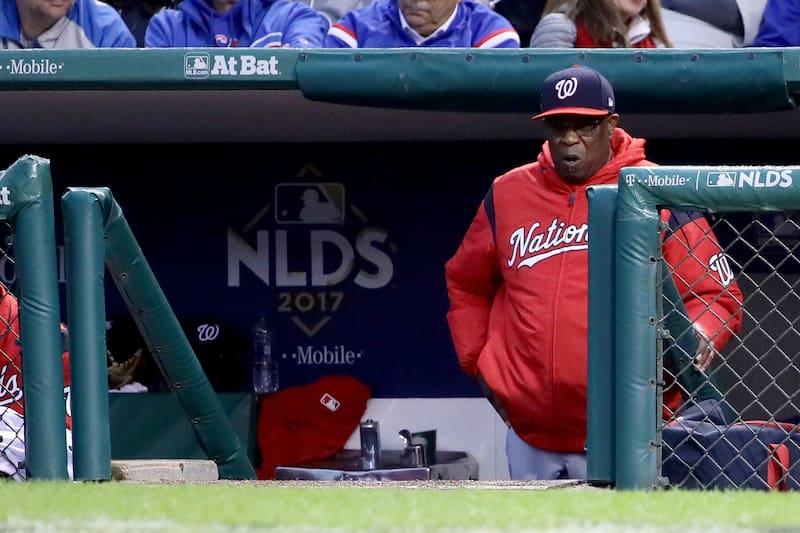
    CHICAGO, IL - OCTOBER 11:  Manager Dusty Baker of the Washington Nationals looks on from the dugout in the sixth inning during game four of the National League Division Series against the Chicago Cubs at Wrigley Field on October 11, 2017 in Chicago, Illin
    Jonathan Daniel/Getty Images
    In the wake of Williams' firing, Washington initially wanted former San Diego Padres skipper Bud Black to take over. But after it neglected to make him a reasonable offer, it turned to Dusty Baker instead.
    If nothing else, Baker figured to be the anti-Williams. He came to the Nationals with 20 years of managerial experience, through which he'd garnered a reputation as a players' manager.
    Baker more than earned his keep in two years. The Nationals won 95 games in 2016 and 97 in 2017. And while they once again fell short in the postseason, it's hard to pin those failures squarely on Baker.
    The Nats went into October with injury red flags in '16 (i.e., Harper's shoulder) and '17 (Harper's knee and Scherzer's hamstring). In Game 5 of the '16 NLDS, Scherzer and a parade of relievers couldn't shield the Nats from a decisive four-run seventh inning. In Game 5 of the '17 NLDS, all hell broke loose, and the Nats happened to be on the wrong side of it.
    Baker lost his job anyway. According to Jon Heyman, then of FanRag Sports (via Chris Chavez of SI.com), Nationals players weren't too thrilled about it. For that matter, neither was Rizzo.
    "[Rizzo] sounded like it was one of the hardest things he had to do," Baker told Dave Sheinin of the Post.
    It appears Baker lost his job only because principal owner Ted Lerner and his family wanted him gone. It seems they were still sour about Baker's openly pining for an extension in the middle of the 2017 season. Or maybe they just like cycling through managers.
    Baker's firing might have become water under the bridge if Dave Martinez had made a strong impression as his replacement this season. Martinez is another first-year manager, but his years as an understudy to Joe Maddon promised to bring a missing dynamic to the team.
    "As we went through this process," Rizzo told reporters, "it became clear the type of manager we were looking for: someone who is progressive, someone who can connect with and communicate well with our players and someone who embraces the analytical side of the game."
    It's not all Martinez's fault he's failed to live up to the hype. Well before the team was broken up by waiver trades of Murphy, Gonzalez, Matt Adams, Ryan Madson and Shawn Kelley, it had already been broken by the injury bug. According to Roster Resource, only two teams have been hit harder by injuries.
    And yet, he can't escape blame. Complaints have been filed about his bullpen management and his tendency to send mixed messages. Even if he does have a good analytical mind, such issues raise questions about whether he has the same ability as Dave Roberts, AJ Hinch, Alex Cora or Aaron Boone to implement his vision.
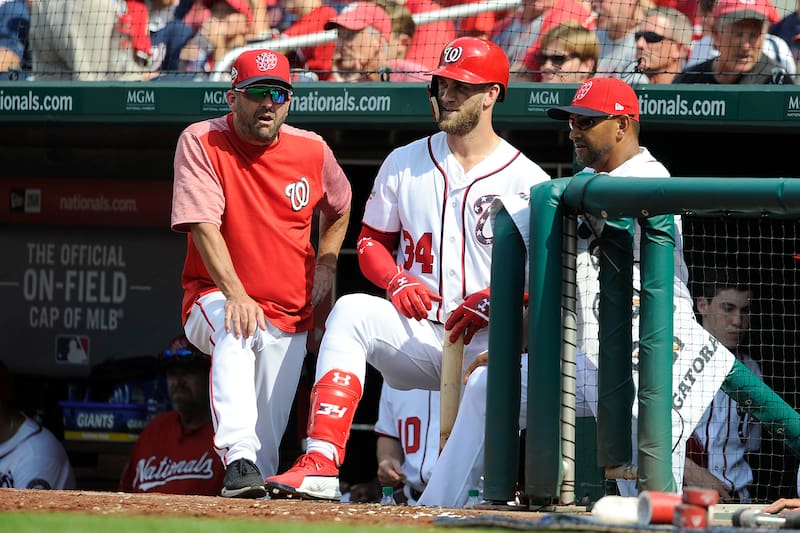
    WASHINGTON, DC - AUGUST 05:  Bryce Harper #34 of the Washington Nationals talks with hitting coach Kevin Long #54 and manager Dave Martinez #4 during a pitching change in the eighth inning against the Cincinnati Reds at Nationals Park on August 5, 2018 in
    G Fiume/Getty Images
    There are certainly other criticisms about how the Nationals have handled the Harper era. Their transactional record is mighty good but not spotless. To wit, it's beyond the pale that their catching situation has been the worst in the game in 2017 and 2018.
    But all told, the story of Washington's failure in the Harper years has less to do with the pieces and more to do with the glue that's held them together. It too easily didn't stick.
    Granted, the Harper years might not be over yet. Money won't be the only thing they can offer him as a free agent. Missteps aside, they're still one of MLB's strongest franchises, and Harper may not find a better place to chase a ring.
    But if the end is indeed nigh, there's really only one thing to say.
    What a waste.
       
    Stats accurate through Monday and courtesy of Baseball Reference.

    Berlin: The city where anything goes

    Berlin, Germany (CNN) — Burlesque dancer Anja Pavlova unhooks her spangled brassiere, tosses it aside and turns to face the cheering crowd. In the steaming hot Hoochie Koo club, the temperature shifts up a couple of extra degrees.
    A pair of feather fans hide her nearly naked breasts as she continues her dance. Eventually, even these are cast aside as, with a smile on her face, the act reaches its big reveal.
    It's a typical night in Berlin, a place where, says Pavlova, anything goes.
    As the summer sun sets over the city, it certainly seems that way. The crowds pack into nightclubs like uber-cool Berghain or the bondage and erotica-themed KitKatClub to sweat and grind to some of the planet's hottest techno music.
    Burlesque artist Anja Pavlova
    Anja Pavlova performs a burlesque dance in Berlin.
    Kevin Broad/CNN
    Long after dawn the next morning, they'll scatter through the streets, either rolling into bed to get some rest until the next party starts, or powering on through until night descends once more.
    This is no new phenomenon.
    Burlesque dancers were disrobing on stages here back in the 1920s and '30s as part of a scene that inspired the musical "Cabaret." The city's dusk-til-dawn hedonists have always found somewhere to do their thing, no matter what that thing is.

    Existential crisis

    Aside from the dark days when a wall divided the city between the communist East and capitalist West -- and, of course, the darker days of Nazi rule -- laid back Berlin has always been a city that knows how to enjoy itself.
    Few cities have been so marked by recent history. A visit to Berlin has to include taking in some of the 20th century troubles.
    It has also long enjoyed a double life. While the city revels in its countercultural cred, Berlin also has a deeply square side. It serves as the capital of the most powerful economy in Europe -- a federal bureaucracy with a reputation for stability and a passion for risk adversity.
    This coexistence is what makes Berlin such an intriguing city to visit, but how does it sustain such a split identity?
    Can its bohemian nature survive as hipsterization drives up living costs? And will it weather Germany's wider existential crisis over the record number of migrants and asylum seekers who now call the country, and Berlin in particular, home?
    To understand how Berlin has evolved -- and how it continues to reinvent itself in the face of repeated crisis -- involves diving into its very turbulent history, and meeting the folks who now embody its diverse and irrepressible spirit.
    Berlin images
    Esra Rotthoff: "Berliners are less materialistic."
    Barry Neild/CNN
    "Berlin is not Germany," says Esra Rotthoff, a photographer who, as a child of a Turkish mother and German father, is about as Berlin as anyone can get. "It's always been different from the rest of Germany."
    Unlike other Germans, she says, Berliners typically shy away from materialistic pursuits.
    Rotthoff should know. She's an artistic collaborator with the Maxim Gorki Theater, a downtown playhouse named after a Soviet author that's known for political productions. The theater's walls are adorned with the deadpan faces of actors photographed by Rotthoff.
    "It's more about what you bring to the city in terms of concepts maybe as an artist, or in terms of ideas," she says. "That's my feeling. That's the general culture... maybe."

    Live for today

    Berlin photos
    DJ Peggy Gou came to Berlin to master techno music.
    Barry Neild/CNN
    One of those bringing artistic talent is Peggy Gou, a Korean-born DJ who made techno music powerhouse Berlin her home three years ago. She's one of the latest wave of millennial creatives who have poured into a city now seen as the pinnacle of European cool.
    "When I moved to Berlin," Gou tells CNN while spinning vinyl in a corner of hip members club Soho House Berlin. "I remember, I was on the street. I was trying to ask some questions, but I met no one who was actually from Berlin!"
    For Gou, Berlin was an education. Working in a record store and frequenting techno clubs like Berghain, she mastered her craft. Now she's a relatively big-name DJ, commanding decent money to play sets around the world.
    Burlesque and techno would be odd bedfellows in any other city, but in Berlin it's par for the course.
    The city's biggest lesson? Not surprisingly for a place that's survived two world wars and the isolation of the Berlin Wall, it's the hedonistic mantra of "live for today."
    "Berlin made me understand that you have to be in the right place, for the right DJ, right crowd, right sound system," she says.
    But, from the front line of fashion, Gou can sense a change coming as the money pours into her adopted home, professionalizing what was once an underground scene.
    "Three years ago I was like, 'yeah, yeah, yeah, I'm learning a lot, I'm experiencing a lot, I'm still new in the city,'" she says. "But now, when people ask me, 'do you like living in Berlin?' I say, 'I like living in Berlin because I'm not there all the time.' "
    Admittedly, three years is a long time in this city.
    It's barely recognizable from the place that emerged from the collapse of the Berlin Wall -- one side a gray, communist sprawl, the other a garish island of capitalism, lousy with spies. So much so, it's often hard to believe the events that happened here so recently.

    Orderly chaos

    The relics of that era still dot the city, Checkpoint Charlie, the TV tower and sections of the Wall like the graffiti-covered East Side Gallery. In the heart of the city, the Brandenburg Gate, once bullet-scarred and hidden behind the Wall, is now a proud symbol of unity.
    Overlooking the gate, the posh Hotel Adlon Kempinski, disliked by Nazi leader Adolf Hitler because of its international clientele and left to rot under East German communist rule, has now risen once again. Its modern presidential suite has hosted Britain's Queen Elizabeth -- twice.
    Lest anyone forget the grimmest of all chapters of Berlin's recent history, a short stroll from Brandenburg is the Memorial to the Murdered Jews of Europe, a bleak and compelling 4.7 acre site covered with a grid of gray concrete slabs.
    Berlin images
    Berlin's Memorial to the Murdered Jews of Europe.
    Barry Neild/CNN
    Built in 2005 by architect Peter Eisenman, it's attracted complaints from those who say its blocks dehumanize the depravity of the Holocaust. Critics also say it fails to adequately address how and why those victims died.
    But walking through the oppressive center of this memorial, taking its size and scale, visitors might get a fleeting sense of the orderly chaos created by the Nazi machine as, from its seat of power in Berlin, it set out to annihilate millions of men, women and children.
    Berlin certainly isn't afraid to confront its past.
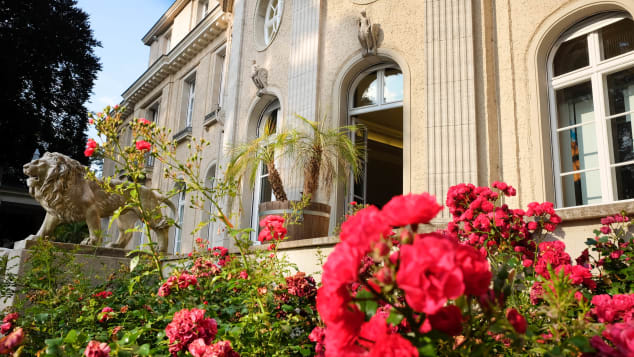
    In the upscale suburb of Wannsee, where locals escape the summer heat to swim in and sunbathe around an idyllic lake, a rather grand villa has, since 1992, been open to the public as another memorial to the terrible crimes of the Nazis.
    On January 20, 1942, the villa -- now known as the House of the Wannsee Conference -- hosted a meeting of 15 Nazi figures including Adolf Eichmann and Reinhard Heydrich as they gathered to discuss their plans for eliminating 11 million Jews across Europe.
    Berlin images
    The House of the Wannsee Conference: Idyllic setting for an act of evil.
    Barry Neild/CNN
    The chilling detachment with which they contemplated mass slaughter stands out in the documents preserved from the event, written in the banal language of middle management.
    There's the initial communication from Heydrich: "I invite you to attend such a meeting... to be followed by breakfast."
    There's also the minutes of the discussion, laying out in no uncertain terms what was wanted. "In the course of the practical implementation of the Final Solution, Europe will be combed through from west to east."

    Warnings of the past

    Standing in the very room where the nuts and bolts of the Holocaust were decided -- followed by brandy and cigars -- it's hard to conceive how these men could plot the extermination of millions of people.
    The villa's beautiful setting only serves to make the enormity of their actions more incomprehensible.
    It also raises the question: How can a city move on from such evil?
    One remarkable woman who can answer that question is Margot Friedlander, a 96-year-old Holocaust survivor who, despite the persecution, torment and loss inflicted on her before and after World War II, decided to return to Berlin in 2010, decades after moving to New York.
    Friedlander survived for one year and three months in hiding in Berlin as the Nazis rounded up the city's Jews, sending many to their deaths in concentration camps. The willingness of non-Jewish Berliners to offer shelter saved her life many times.
    Berlin photos
    Margot Friedlander: "I still love Berlin."
    Barry Neild/CNN
    Despite her age, she's an incredibly active woman, proudly showing a fully booked calendar of speaking engagements, mainly telling young people about her experiences in the hope that a new generation will heed the warnings of the past.
    So why come home?
    Partly, Friedlander tells CNN, because she felt a need to speak on behalf of those who perished in the Holocaust -- something she does in her book "Try to Make Your Life," named after her mother's parting instructions as she was taken by the Nazis.
    But also because, she says, for all her experiences, Berlin is her hometown and its people once did their best to spare her a terrible fate.
    "I had a different feeling for Germany because I met Germans who did something that was very, very much forbidden," she says. "It could have cost their head. And this was also part of my decision to come back to Berlin, because I met some good people.
    "And now again, I met wonderful people whom I'm very happy to reach out to because they are grateful [that I] do what I do, to come back. And because they say, 'Here you do belong too.'"

    Bourgeois and bohemian

    One consequence of Friedlander's return to Berlin is the recent decision to make her an honorary citizen of the city in recognition for her work. She gleefully points out that she's survived considerably longer than previous recipients of the title.
    "Hitler, Goering and Goebbels were also honorary citizen," she says. "And today a Jewish woman gets to be an honorary citizen."
    She adds: "I still love Berlin and I wish I would be a little younger to be more able to take part of all the things."
    Those things may or may not include Anja Pavlova's burlesque performance at the Hoochie Koo, a regular night staged in Berlin's Roadrunner Rock & Motor Club.
    Situated right by the Brandenburg Gate, Berlin's luxury Hotel Adlon Kempinski has witnessed some of the city's most tumultuous events.
    Pavlova, a Russian who moved to Berlin in 2017 to tap into the city's exotic cabaret scene, speaks eloquently about how the different sides of the city manage to live alongside each other.
    In the former West Berlin, "you have these bourgeois German grandmothers in their furs and pearls," Pavlova tells CNN. And 20 minutes away by train in the former East, "moms at the playground with the tattoos on their necks and dreadlocks ... on their phones and drinking beer in broad daylight while their kids play around naked."
    "They just coexist. They just happen. And they don't really influence each other, and that I find the most charming thing about Berlin."
    Can that coexistence, that winning blend of bourgeois and bohemian -- that sense of openness -- survive as the city continues to gentrify, prices rise and the world moves on?
    "Even in the last year I can feel that the pace is picking up, there's more business," Pavlova laments. "But it's still the city where anything goes."